
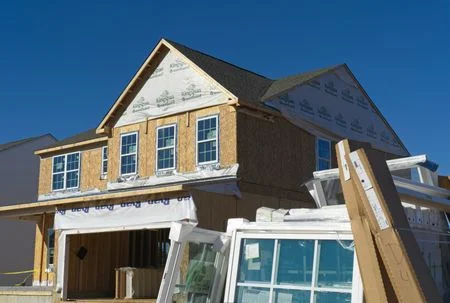
Building a home before you have a buyer gives you more control over the finished product and potential margin, but it also means carrying the project from land acquisition through sale. A spec construction loan provides the short-term capital to finance that ground-up build before a buyer is under contract.
For experienced investors and developers, construction financing needs to match the way the project actually progresses: capital is deployed in stages, costs evolve throughout the build, and repayment depends on a clear sell or refinance strategy.
This guide covers how spec construction financing works, what lenders evaluate, and how to compare your options, with insights grounded in LendingOne’s experience financing ground-up projects for real estate investors.
Key Takeaways
- A spec construction loan funds a ground-up home you build before a buyer is lined up
- Money is released in stages called draws, so you pay interest only on what you have used
- Lenders look at the land, the build budget, the finished value, and your track record
- LendingOne funds spec builds up to 90% of cost, with draws that can fund in as little as two days.
What Is a Spec Construction Loan?
A spec, or speculative, construction loan finances a ground-up residential project before a buyer is committed to the property. You start construction before a buyer is committed, taking on the market risk that comes with selling the home after completion.
Unlike financing for an existing property, construction financing funds the project as the home is built. The lender bases the loan on your plans, your budget, and the projected value of the completed house.
How Spec Construction Loans Work
Construction funds are typically not advanced in full at closing. They release money in stages called draws, tied to finished milestones like the foundation, framing, and final finishes. As each construction phase is completed, you request a draw, and the lender verifies the work before releasing the next portion of funds.
Interest is charged only on the money you have drawn. Because interest accrues only on drawn funds, interest expense is generally lower earlier in the project when less construction capital has been deployed.
With LendingOne, you pay no interest on undrawn construction funds. Terms usually run 12-24 months. At completion, the loan is typically repaid through the sale of the property or refinanced into longer-term financing.
Spec vs. Pre-Sold Construction
The defining difference between spec and pre-sold construction is whether a buyer is committed before the build begins. That distinction also changes who carries the market risk and how much control the builder retains.
With a spec build, you construct first and find the buyer later, carrying the project and its costs until it sells.
With a pre-sold or custom build, a buyer is under contract before construction, often bringing their own financing. A committed buyer can reduce market risk, although the builder may have less flexibility over design, pricing, and other project decisions.
For investors, the decision is ultimately a balance between greater control and potential margin on one side and greater market exposure on the other. A successful spec build gives you the opportunity to capture the builder’s margin while retaining control over design, pricing, and timing.
Why Investors Build on Spec
For investors, the primary opportunity is creating value through the development process rather than purchasing a completed home at retail. When project economics support it, building and selling can allow you to capture development margin rather than acquiring a completed home at retail.
Local supply and demand can strengthen that opportunity. Where existing inventory is tight, a completed spec home can meet buyer demand quickly. You can track these conditions through new construction market trends before you commit to a lot.
Spec construction can also provide flexibility at completion. You can sell the completed property and realize any project margin, or retain it as a rental for longer-term cash flow.
Spec Construction Loan Requirements
Requirements vary by lender, but investor-focused construction programs commonly look for:
- Leverage: Expect up to roughly 85%-90% LTC and 65%-75% ARV, depending on the project and borrower experience.
- Borrower equity: At maximum leverage, plan to contribute roughly 10%-15% of project cost, with less-experienced borrowers often bringing more.
- Experience: One or more recent ground-up projects is a strong benchmark; some lenders reserve their highest leverage for borrowers with 5+ projects in the past three years.
- Credit: A 650-660+ FICO is a common starting point among private construction lenders, although requirements vary by program.
- Liquidity: Expect lenders to review available cash for your contribution and project carry; reserve requirements vary, and some programs require no fixed reserves.
- Project plan: Be prepared with building plans, a line-item budget, contractor information, permits or a clear path to permitting, and a realistic 12-24 month build and exit timeline.
For LendingOne, qualified new construction borrowers can receive up to 90% LTC and 70% ARV, with no reserves required at closing. Borrowers must have completed at least one ground-up project within the past 36 months, and loan terms run 12-24 months.
LendingOne also charges no interest on undrawn construction funds, with draws available in as little as two days.
Spec Construction Loans vs. Bank and Hard Money Financing
Spec builders commonly compare investor construction loans with bank financing and hard money. The differences in leverage, speed, documentation, and cost can materially affect which option fits a particular build.
| Financing Option | Best For | Max Leverage | Speed | Tradeoff |
| Investor Spec Construction Loan | Spec builders and investors | Up to 90% LTC and 70% ARV | Fast, milestone draws | Mid-range rate |
| Bank Construction Loan | Owner-builders with strong income | ~80% or lower | Slow, income docs | Lowest rate, strict |
| Hard Money Construction | Quick or distressed deals | Up to ~70% ARV | Fast | Highest cost, short term |
Each option trades cost for speed and flexibility:
- Bank construction loans may offer lower rates, but they typically involve more extensive income documentation and longer underwriting timelines.
- Hard money can prioritize speed and flexibility, although it generally comes with higher pricing and shorter terms.
- Investor-focused construction financing can provide a middle ground, balancing execution speed and project-based underwriting with more moderate pricing.
Explore LendingOne’s new construction financing to see how its investor-focused terms apply to ground-up projects.
How to Get a Spec Construction Loan
Getting approved for a spec construction loan depends on both the strength of the project and your ability to execute it. Before applying, you should be ready to show the lender how the property will be built, funded, and ultimately repaid.
1. Secure the lot and finalize the project budget
Start with control of the property, whether through ownership or a purchase contract, and build a detailed budget covering land, labor, materials, permits, fees, and contingency costs. The lender will use these figures to evaluate your total project cost and required borrower contribution.
2. Choose a lender that finances investor spec construction
Not all construction lenders work with non-owner-occupied projects. Look for a lender that understands business-purpose ground-up construction and can evaluate the deal based on factors such as project economics, finished value, and your construction experience.
3. Submit the project for underwriting
Expect to provide building plans, a line-item budget, construction timeline, contractor information, projected finished value, and a clear exit strategy. The lender will also review your credit, liquidity, and track record with similar ground-up projects.
4. Close and draw funds as construction progresses
Construction funds are typically released in stages rather than all at once. As major milestones are completed, you request draws, and the lender verifies the work before releasing the next portion of the construction budget.
5. Sell the finished home or refinance into a rental loan
Once construction is finished, repay the loan by selling the home or refinancing it into longer-term rental financing. Planning that exit before closing helps ensure the loan term, projected value, and overall capital structure support your investment strategy.
Planning Your Exit: Sell or Refinance to Rental
A clear exit strategy should be established before construction begins. That strategy determines how the construction loan will be repaid and whether additional financing will be needed after completion.
If you sell, the construction loan is repaid at closing, and any remaining project margin is realized through the sale. If you hold, you refinance into a long-term DSCR rental loan, which qualifies on the property’s rent rather than your personal income. DSCR stands for debt service coverage ratio, a measure of whether the rent covers the loan payment.
For portfolio builders pursuing a build to rent strategy, the refinance path can also extend to institutional financing designed for multiple properties. Institutional build to rent financing can support larger portfolios and provide a more scalable capital structure for operators developing multiple homes.
Why Investors Choose LendingOne for Spec Construction
LendingOne provides business-purpose ground-up construction financing for real estate investors in 46 states. Its new construction financing is structured around the capital and execution needs of experienced investors and developers.
- New construction financing reaches up to 90% of cost and up to 70% of finished value.
- Loan sizes range from $200,000 to $2 million, with larger facilities available to qualifying portfolio builders.
- You pay no interest on undrawn funds, and draws can fund in as little as two days.
- Eligible properties include single-family homes, infill lots, spec builds, and build to rent.
- LendingOne serves investors in 46 states, with experienced advisors who understand the financing and execution demands of ground-up construction.
Ready to fund your next spec build? Get started with LendingOne to see your rate and connect with an advisor.
FAQ: Spec Construction Loans
How Much Do You Need to Put Down on a Spec Construction Loan?
Your down payment is the share of total cost the loan does not cover. If a loan finances up to 90% of project cost, your contribution may begin around 10%, although the actual amount depends on the property’s value, land equity, and other underwriting factors.
Can You Finance a Spec Build With No Money Down or Get 100% Financing?
100% financing is uncommon because most lenders require the borrower to contribute equity to the project. You usually cover the gap between the loan and total cost, though land equity can lower the cash you bring to closing.
What Credit Score Do You Need for a Spec Construction Loan?
Credit is one part of the underwriting review, alongside project economics, construction experience, liquidity, and other program requirements. Minimum credit requirements vary by lender and program. Credit is still reviewed, and exact requirements vary by lender and program.
What Are the Monthly Payments During Construction?
You generally make interest-only payments on the balance you have drawn. Because interest is based on the amount drawn, payments generally increase as additional construction funds are advanced. With LendingOne, no interest is charged on undrawn funds.
Does a Spec Construction Loan Cover the Cost of the Land?
Yes. Many spec construction loans, including LendingOne’s, can fund the land along with hard costs like labor and materials and soft costs like permits and design.
How Is a Spec Construction Loan Different From a Fix and Flip Loan?
A spec construction loan funds building a home from the ground up on a lot, while a fix and flip loan funds buying and renovating a home that already exists. The primary distinction is that spec construction financing supports a ground-up build, while fix and flip financing is used to acquire and renovate an existing property.


