
Demand in the single-family rental market has been increasingly on the rise. As housing prices continue to climb and inventory is unable to keep up with the growing demand, potential buyers are shifting their focus more towards renting. 

John Burns Research & Consulting recently released their Single-Family Rental Survey reporting on the current metrics surrounding the SFR market. They surveyed over 234K owners of professionally managed SFR homes across 52 markets in the first half of August.  According to the report, the SFR market has stabilized in recent quarters from the cooling-off period the country experienced following the pandemic boom. They are seeing a national blended SFR rent growth holding steady at 6.5% from Q1 to Q2 of this year, and new lease growth has increased from 7% to 8% nationally from Q1 to Q2. Additionally, operating expenses have grown nationally, causing an offset in rent gains. 

We outline our top three takeaways from the report for real estate investors interested in the current state of the single-family rental market. 


1. Blended SFR Rents Are the Fastest Growing Asset Class 

The survey reports that national blended SFR rent growth (7% YOY) exceeds apartment rent growth (2% YOY) and new and resale home price appreciation (1%-2% YOY). Overall, blended SFR rents were reported to be growing faster than other asset classes like new home and apartment markets or the resale market. 
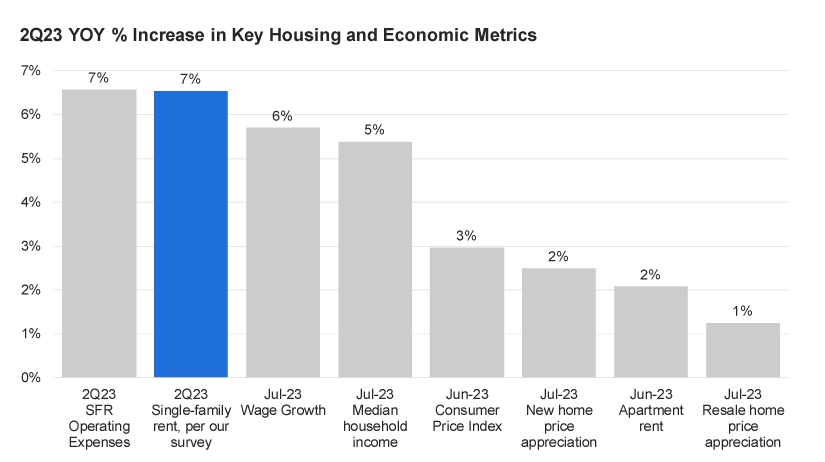
Sources: Reis Services, LLC; Census Bureau; Moody’s Analytics; Burns Home Value Index™ (BHVI); Atlanta Federal Reserve Board Wage Growth Tracker; Blended single-family rent growth as published in the Burns Single-Family Rental Market Index.


2. Average Rent Prices Nationally Reached $2,054 in Q2 

The report states that approximately half of respondents reported average rents of $1,750 – $2,250, resulting in a national average rent of $2,054 in Q2.  Northern California had the highest weighted average monthly rent at $2,900, with the Midwest averaging the lowest at $1,700. Northern Florida rents averaged $2,100, a higher average rent than the Southeast region’s $1,750. 
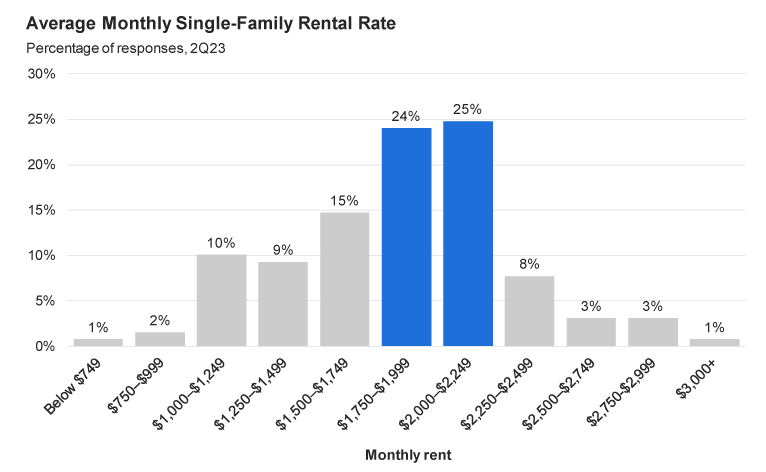
Source: John Burns Research and Consulting, LLC (Data: 2Q23, Pub: Aug-23)


3. Occupancy is at an All-Time High (97% Average) 

According to the survey, operators reported a 97% average occupancy rate nationally, with 13% of operators seeing 99%-100% occupancy across their portfolios.  Overall, occupancy rates were up significantly from Q2 (95%) to Q1 (72%). Northern California held the highest occupancy rate at 99% with Southern California, Southern Florida, and the Northwest following at 98%. 
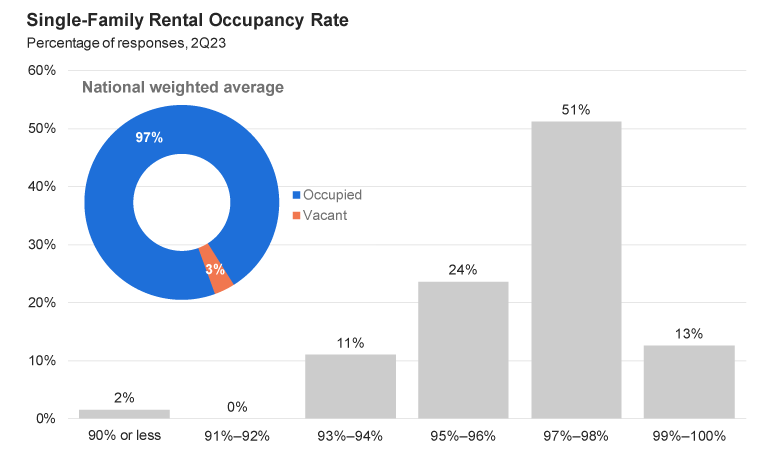
Source: John Burns Research and Consulting, LLC (Data: 2Q23, Pub: Aug-23)


This growing single-family rental market offers real estate investors lucrative chances to scale their portfolios and increase revenue. LendingOne offers a variety of rental loan products that can provide the necessary financing options investors need. Click here to learn more.


For real estate investors seeking to turn distressed properties into lucrative opportunities, fix and flip loans are an essential tool. This specialized financing option is designed to support fix and flip investors’ strategy, allowing them to purchase rundown properties, renovate them, and sell for a profit. In this comprehensive guide, we will explore all aspects of fix and flip loans, their benefits, and how they empower investors to thrive in the competitive real estate market.

What Are Fix and Flip Loans?

Fix and flip loans, also known as rehab loans or hard money loans, are short-term financing options tailored specifically for real estate investors pursuing fix and flip projects. Unlike traditional mortgages that focus on long-term property ownership, these loans cater to the unique needs of investors seeking swift returns on their investment. Fix and flip loans are secured by the property being renovated, making the process efficient and accessible for experienced and novice investors alike.

The Benefits of Fix and Flip Loans

  1. Quick Access to Capital: Fix and flip loans offer quicker approval and funding, enabling investors to seize time-sensitive opportunities in the real estate market. With a simplified application process, investors can access the necessary capital to purchase distressed properties and begin renovations promptly.
  2. Short-Term Loans: These fix and flip loans typically span from six to twelve months, aligning with the quick turnaround strategy of fix and flip projects. Investors can execute renovations and sell the property within a relatively short timeframe, recouping their investment capital and profits fast.
  3. Minimal Credit Requirements: Fix and flip loans prioritize the property’s potential for profitability and the investor’s experience rather than relying heavily on credit scores. This leniency opens doors for more investors to leverage opportunities.
  4. Higher Loan-to-Value (LTV) Ratios: Fix and flip loans often boast higher LTV ratios compared to traditional mortgages. Lenders finance a substantial portion of the property’s purchase price and renovation costs, reducing the need for a significant upfront capital investment.
  5. Flexibility in Property Types: Fix and flip loans can be used to finance a wide range of property types, including single-family homes, multi-unit buildings, and commercial properties. This versatility empowers investors to explore various market segments.

Applying for a Fix and Flip Loan

  1. Research Lenders: Begin by researching reputable fix and flip lenders who specialize in short-term financing. Consider their interest rates, loan terms, and customer reviews to make an informed decision.
  2. Preparing Documentation: Gather the necessary documentation, such as property information, renovation plans, financial statements, and personal background, to support your loan application.
  3. Loan Application Process: Fill out the loan application form and submit all relevant documentation to the lender. A fix and flip loan typically involves a faster approval process compared to traditional mortgages.

Maximizing Success with Fix and Flip Loans

  1. Conduct Thorough Market Research: Before embarking on a fix and flip project, conduct comprehensive market research to identify profitable locations, emerging trends, and potential buyers.
  2. Create a Detailed Renovation Plan: Develop a detailed renovation plan and budget to ensure a smooth execution of the project. Stick to the plan to avoid cost overruns and delays.
  3. Build a Reliable Team: Assemble a team of experienced contractors, real estate agents, and other professionals who can contribute to the success of your fix and flip project.
  4. Time Management: Efficiently manage the timeline of your fix and flip project to meet deadlines and capitalize on market conditions.

Conclusion

Fix and flip loans are a game-changer for real estate investors seeking to capitalize on distressed properties and maximize their returns. With their quick approval process, short-term durations, and flexibility in property types, fix and flip loans empower investors to thrive in the dynamic real estate market. By conducting thorough research, preparing necessary documentation, and building a reliable team, investors can unlock the full potential of fix and flip loans and achieve success in their investment ventures.

Looking to invest in your next fix and flip property? Learn more about our fix and flip loans with competitive rates, low fees and high leverage options for real estate investors. 

Despite challenges in the market for real estate investors, according to ATTOM’S Q1 2023 U.S. Home Flipping Report, fix and flip activity remains high across the country as profits and returns for flippers show signs of improvement.

Key Highlights from the Report for Fix and Flip Investors: 

ATTOM reported that 72,960 U.S. single-family homes and condos were flipped in the first quarter, representing 9 percent of all sales. This number decreased from 9.4 percent of home sales in Q1 of 2022, but it was still up from 8 percent in Q4 2022, hitting the second-highest level this century. 

Flipping activity did rise, according to their research, but mixed trends resulted for raw profits and profit margins, with both figures increasing slightly from end of last year to beginning of this year but remaining near low points over the last decade. 

Although lower than last year, improvement was seen in the gross profit on transactions nationwide, increasing to $56,000 in Q1 2023, and total profit on flips nationwide was up 4.7 percent from $53,500 in Q4 2022


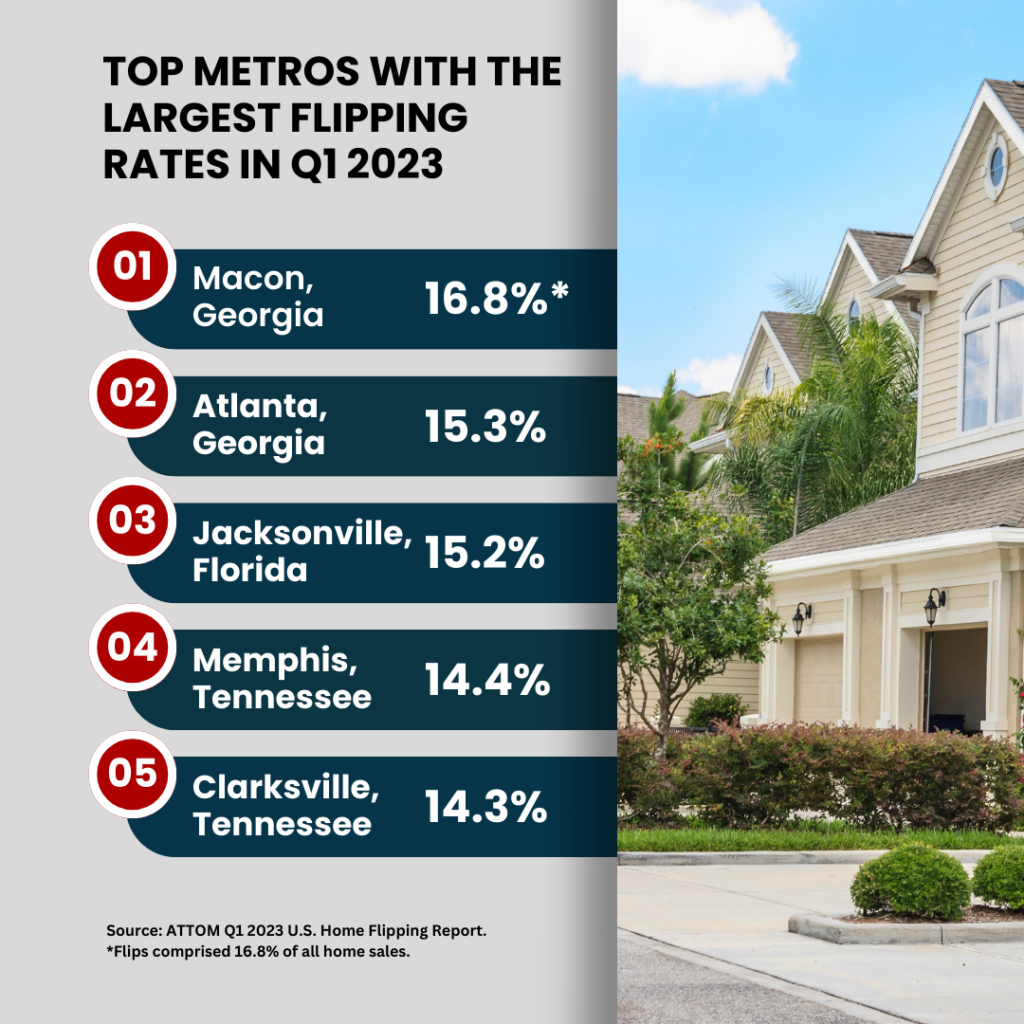
Metros with the Largest Flipping Rates in Q1 2023:

According to ATTOM’s research, from Q4 2022 to Q1 2023, of the 74 percent of U.S. metro areas analyzed, home flips as a portion of home sales increased. 


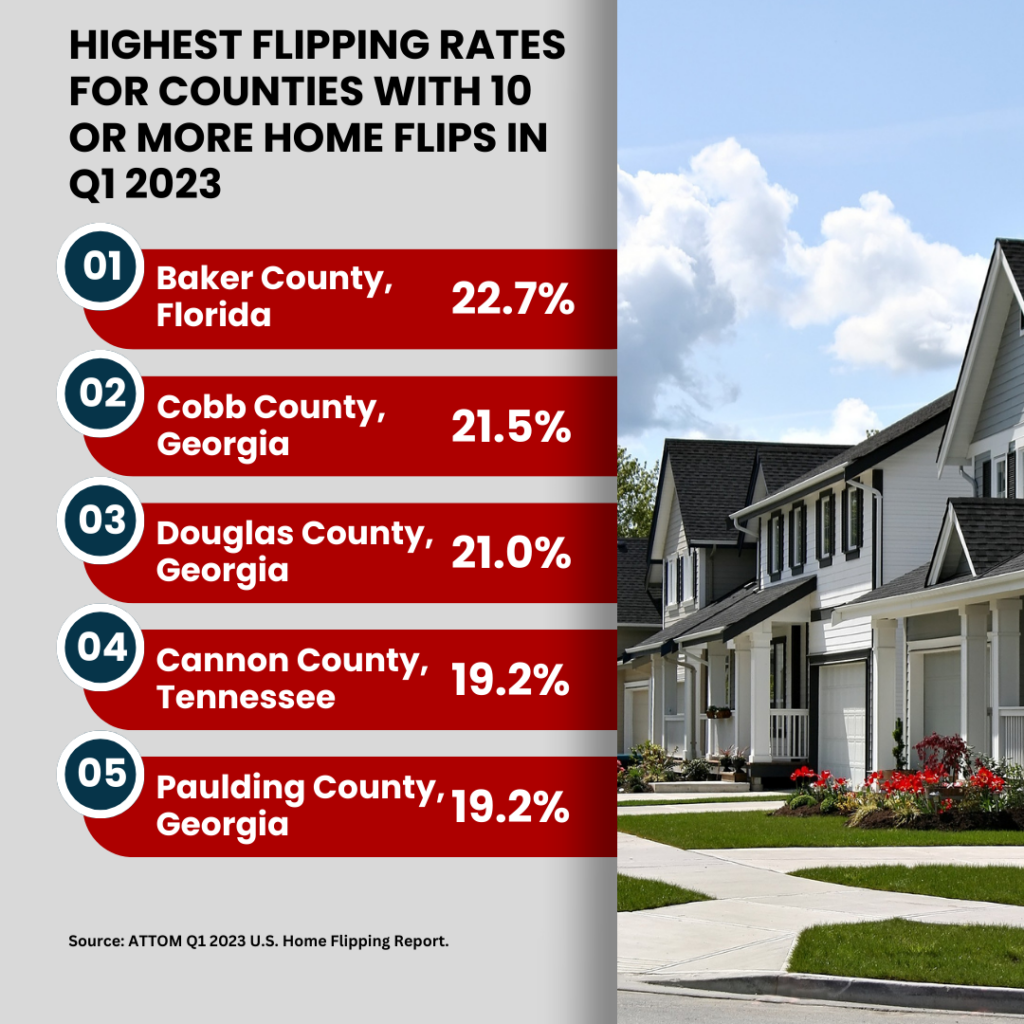
Highest Flipping Rates for Counties with 10 or More Home Flips:

The report goes on to state that home flips represented a minimum of 10 percent of all home sales in 36 percent of the U.S. counties analyzed during Q1 2023. This figure surpassed the 21 percent recorded in Q4 2022. 


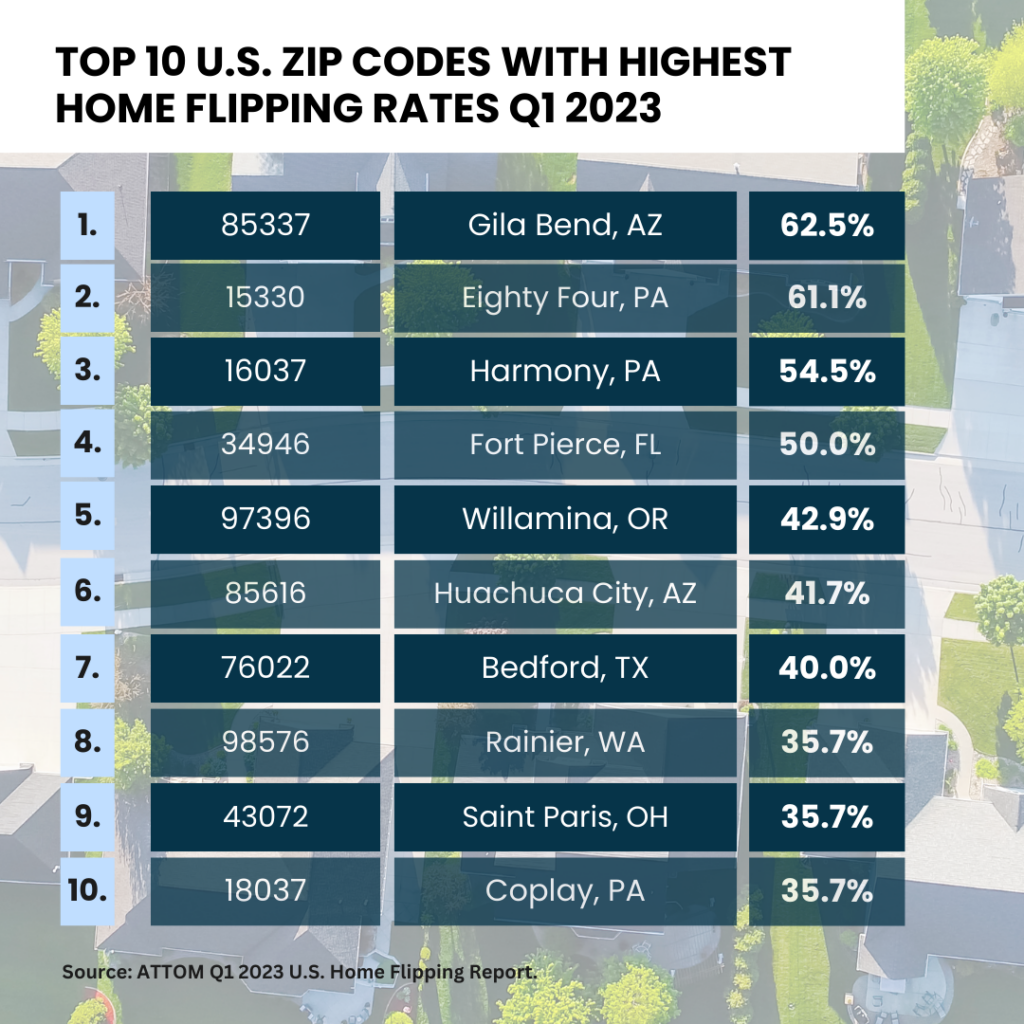
Top 10 Zip Codes with Highest Flip Rates Q1 2023:

ATTOM concluded their report with the list of top 10 zip codes with the highest home flipping rates in Q1 2023. This includes ZIPs with 5 or more home flips recorded in the first quarter of this year. Gila Bend, Arizona made the top of the list at 62.5%. 

Whether you’re a seasoned investor or just starting out, understanding the dynamics of this current real estate market can provide you with a competitive edge and maximize your profitability, especially when deciding your next strategic investment opportunity.  Looking to invest in your next fix and flip property?

Learn more about our fix and flip loans with competitive rates, low fees and high leverage options for real estate investors.